


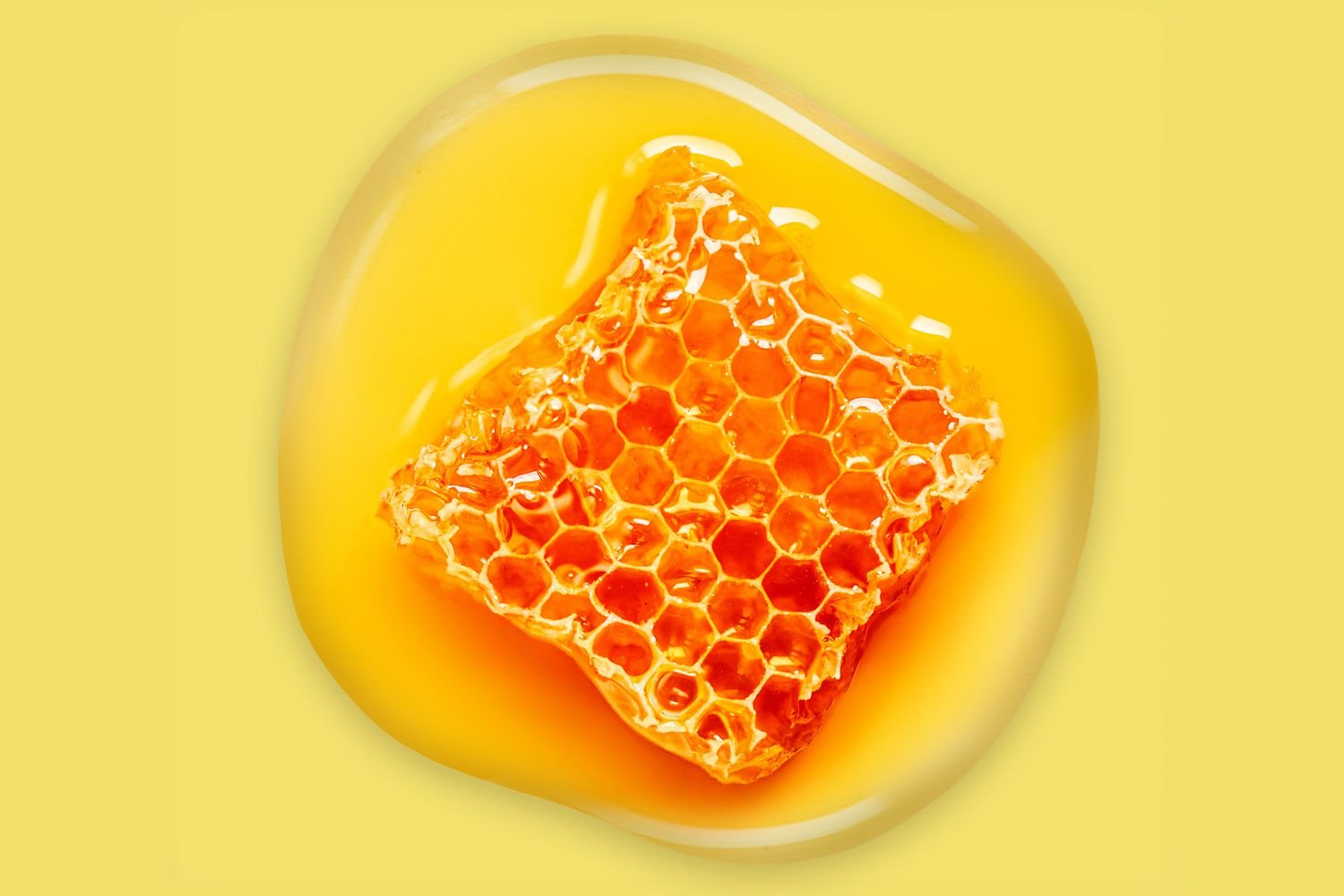

Why is honey the only food that never expires? Archaeologists have discovered pots of honey in ancient Egyptian tombs, some over 3,000 years old, that were still perfectly edible. No other natural food on Earth can make that claim. So what makes honey so different from everything else in your kitchen?
It Starts With Almost No Water
Most food spoils because bacteria, mold, and yeast need moisture to survive and multiply. Fresh fruit, bread, and dairy all have relatively high water content, which is exactly why they go bad within days or weeks.
Honey, by contrast, contains very little water — typically less than 18%. Bees actually work to remove excess moisture from nectar by fanning it with their wings inside the hive before it becomes honey. This low moisture content creates an environment where bacteria simply can’t survive long enough to multiply.
Honey Is Naturally Acidic
Honey has a pH between 3 and 4.5, making it fairly acidic — similar to the acidity found in some fruit juices. Most bacteria and microorganisms struggle to survive in such an acidic environment, adding another natural layer of protection against spoilage.
Bees Add a Natural Preservative
When bees convert nectar into honey, they add an enzyme called glucose oxidase. This enzyme produces small amounts of hydrogen peroxide when honey is exposed to moisture — acting as a natural antibacterial agent that helps kill off any organisms that do try to grow.
High Sugar Content Locks Everything Out
Honey is incredibly dense in sugar, and sugar has a natural ability to pull moisture out of bacteria and fungi through a process called osmosis. This essentially dehydrates any microorganisms that come into contact with honey, preventing them from surviving or reproducing.
Why It Can “Go Bad” Anyway
While honey doesn’t spoil in the traditional sense, it can crystallize over time, forming a grainy or solid texture. This is a natural process caused by glucose separating from water within the honey — it doesn’t mean the honey is unsafe. Crystallized honey can easily be restored to liquid form by gently warming the jar in warm water.

The only real risk to honey’s shelf life is improper storage — if moisture gets into the jar (through a wet spoon, for example), it can create pockets where mold or fermentation can eventually develop, even though this is rare.
The 3,000-Year-Old Proof
The most famous evidence of honey’s near-immortal shelf life comes from Egyptian tombs, including the tomb of Tutankhamun, where archaeologists found sealed pots of honey dating back thousands of years. When tested, the honey was found to still be chemically stable and, remarkably, still edible.
The Bottom Line
Honey’s combination of low moisture, high acidity, natural hydrogen peroxide production, and high sugar concentration creates a nearly perfect environment against spoilage — something no other natural food manages to replicate. As long as it’s sealed and kept dry, a jar of honey sitting in your kitchen could, in theory, outlast you.