


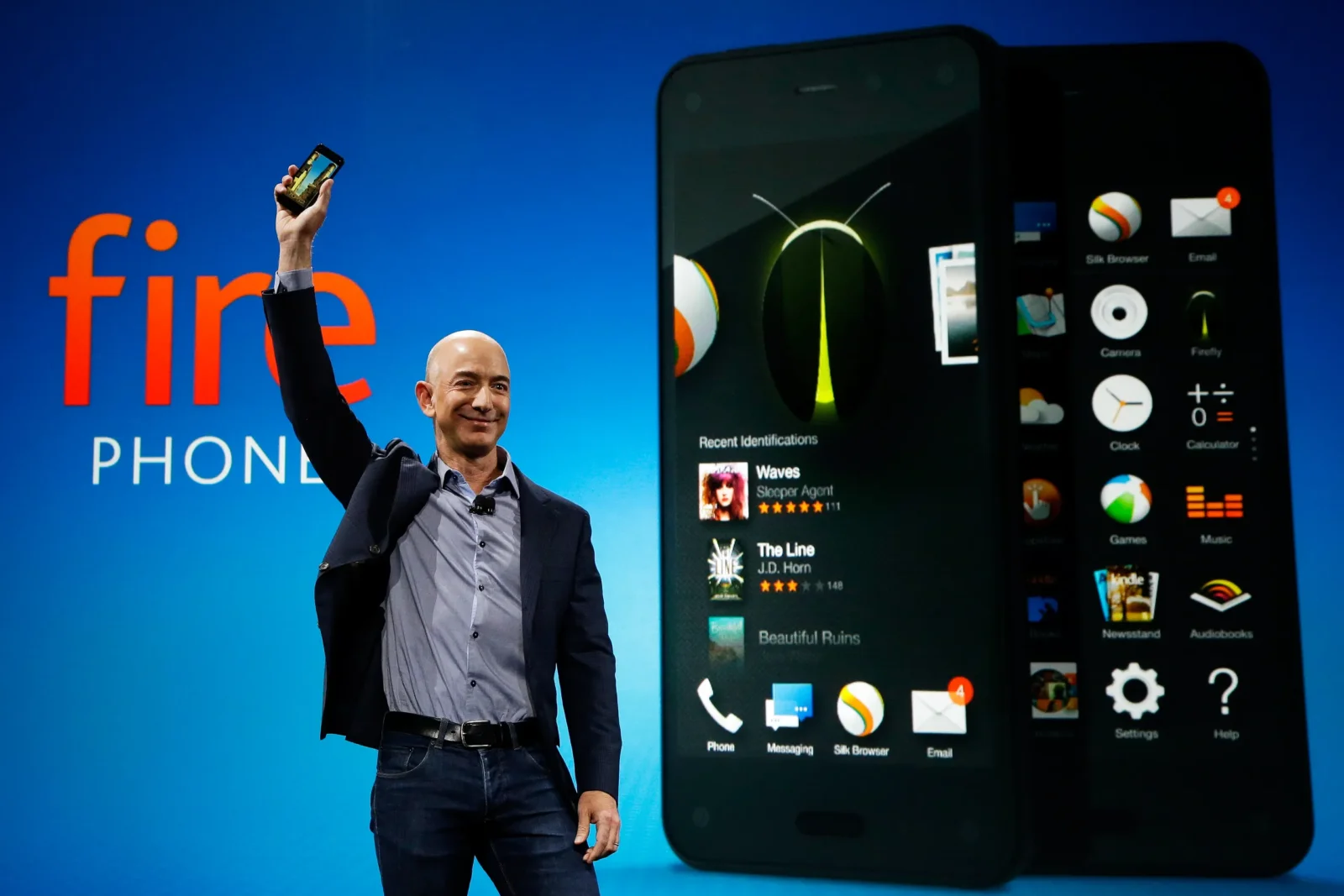

The Amazon Fire Phone failure remains one of the most talked-about hardware disasters in tech history. In July 2014, Amazon did something almost no one expected — it launched its own smartphone. The Amazon Fire Phone arrived with a flashy exclusive feature: a 3D display that used four front-facing cameras to track the user’s face and create a glasses-free 3D effect. It looked impressive in demos. In reality, it became one of the fastest hardware failures in tech history.
A Phone Built Around One Gimmick
The Fire Phone’s headline feature, called “Dynamic Perspective,” let the screen shift slightly as you tilted the phone, creating a pseudo-3D illusion for icons, maps, and some apps. Amazon spent years and reportedly over $100 million developing this single feature.
The problem was simple: nobody actually wanted it. Reviewers found the 3D effect gimmicky rather than useful, and it drained battery life significantly faster than a normal display. Beyond that one flashy trick, the phone itself was unremarkable — a mid-range processor, an average camera, and a $199 price tag on a two-year contract, putting it directly against the iPhone and Samsung Galaxy line without offering a real reason to switch.
No Google, No Problem? Actually, a Big Problem
Amazon built the Fire Phone on a heavily modified version of Android called Fire OS, which meant it had no access to the Google Play Store. Users couldn’t download Gmail, Google Maps, or most mainstream apps. Amazon tried to compensate with its own app store, but it had a fraction of the available apps compared to Google Play or Apple’s App Store.
For a device asking people to switch phones, missing basic apps that millions of people used daily was a dealbreaker.
The Price Cut That Told the Whole Story
Within a month of launch, Amazon slashed the phone’s price from $199 to just 99 cents (with a two-year contract). Even at that price, it didn’t sell. By late 2014, Amazon reportedly had over $83 million worth of unsold Fire Phone inventory sitting in warehouses.
In October 2014, Amazon took a $170 million write-down directly tied to unsold Fire Phones and related inventory — a rare public admission of just how badly the product had failed.

Amazon Quietly Killed It

Amazon never issued a dramatic announcement. The Fire Phone was simply discontinued in September 2015, roughly 13 months after launch, with no successor ever built. Unlike Kindle or Echo, which became long-term successful product lines, the Fire Phone was Amazon’s only real attempt at a smartphone — and its last.
What Went Wrong, In Short
- Built around a gimmick feature instead of solving a real user problem
- No access to essential apps due to skipping Google’s ecosystem
- Priced to compete with established flagships without offering equivalent value
- Rushed to market without clear differentiation beyond the 3D screen
Why People Still Talk About It Today
The Amazon Fire Phone is frequently cited in business and product design courses as a case study in “innovation for the sake of innovation” — building a flashy feature because it’s technically impressive, not because customers asked for it. It’s often compared to Google Glass and Juicero as examples of well-funded companies misjudging what people actually wanted from a product.
What Went Wrong, In Short
Looking back, the Amazon Fire Phone failure boils down to a few clear mistakes: